Expert opinion· Dog Comfort
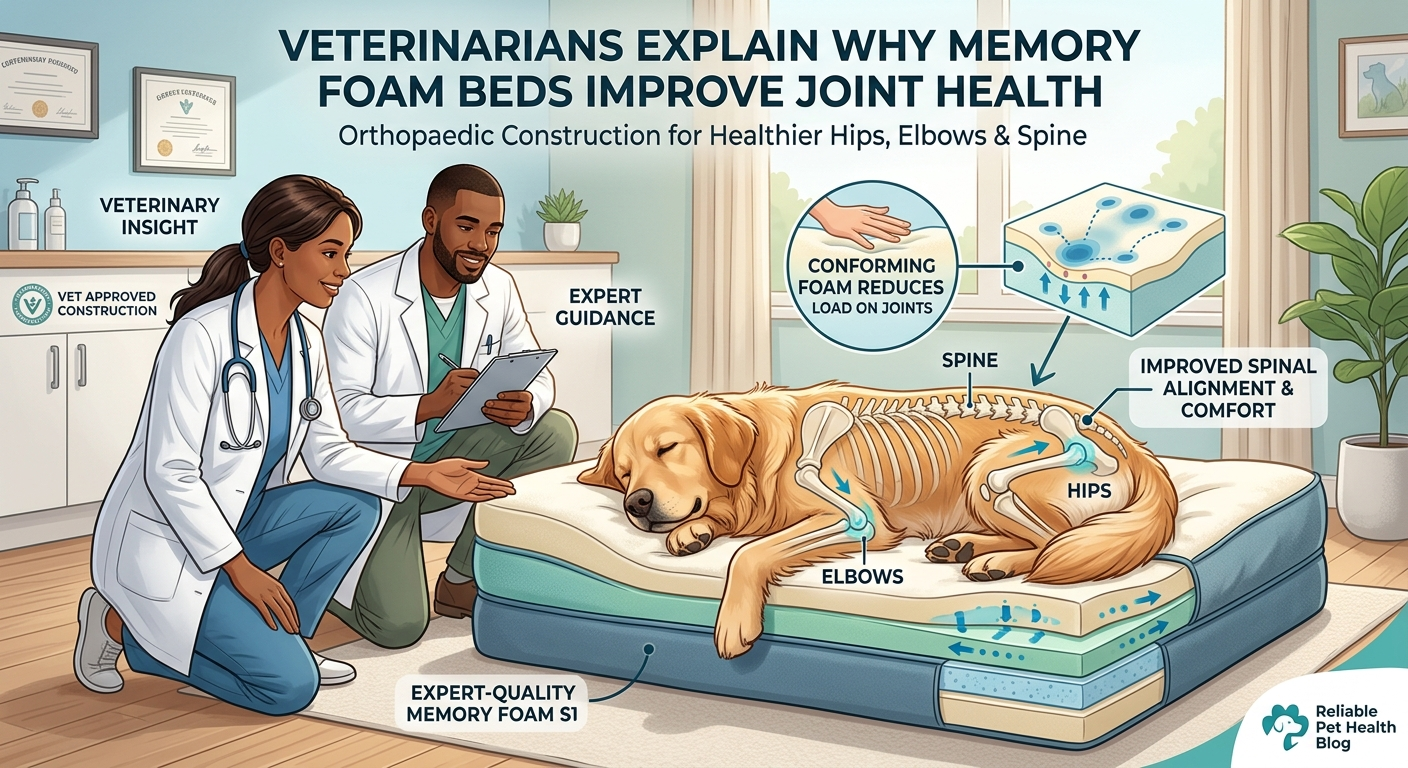
Veterinarians Explain Why Memory Foam Beds Improve Joint Health
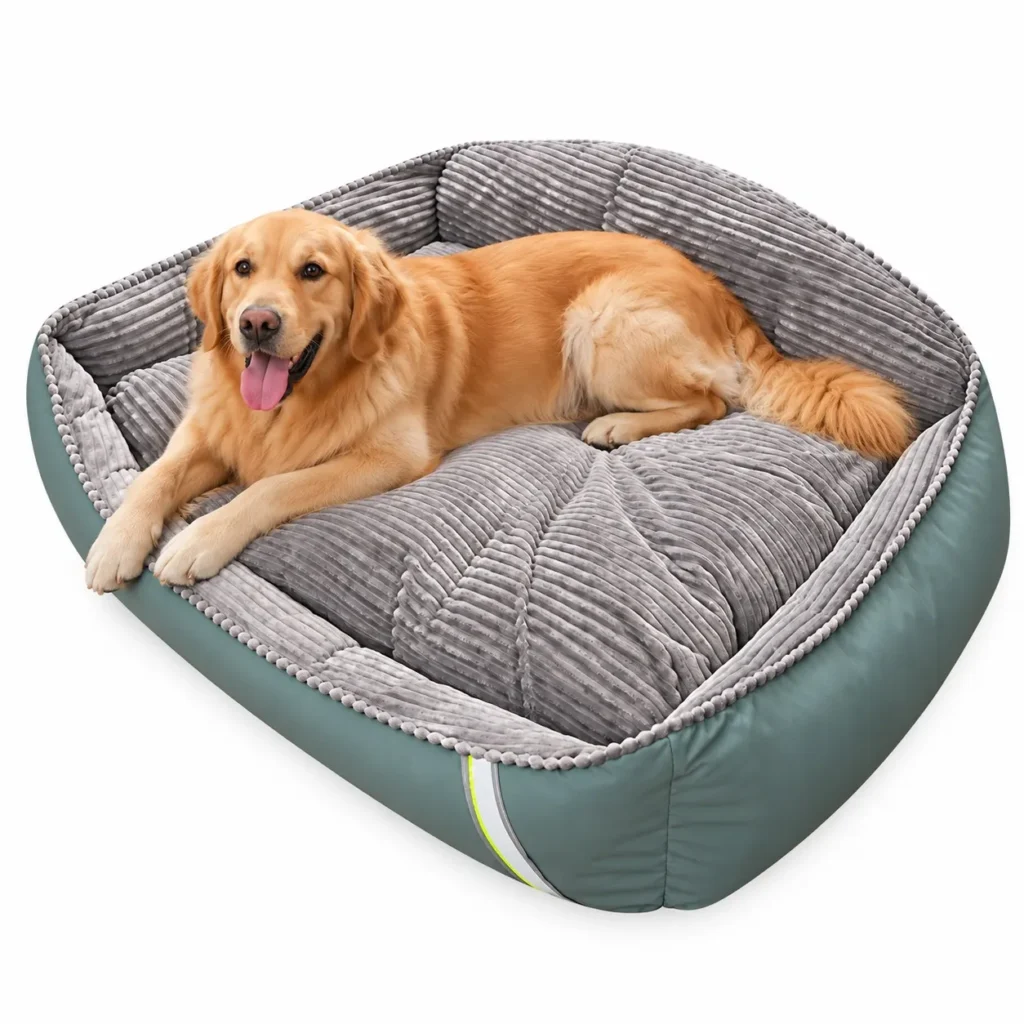
Orthopaedic Dog Beds only become essential when your dog’s joints start paying the price for every jump, twist and hard landing.
James Carter, a pet behavioural specialist, explains how vets use memory foam and orthopaedic construction to reduce that load on elbows, hips and spine, then turns their logic into clear, real‑world bed choices you can make at home.
Pet Experts’ ViewVets explain how memory foam construction actively reduces pressure and supports healthier joints in dogs.
This guide is for owners of big breeds, seniors, and any dog that seems stiff, slower to rise, or less keen to jump. You will see James’s criteria for when orthopaedic memory foam is genuinely needed, how that differs from standard Joint Support Beds for Senior Dogs, and how to choose the right spec when you are comparing Memory Foam Dog Beds Online instead of guessing from photos.
How vets and James, think about joint health and bedding
When vets talk about Orthopaedic Dog Beds, they are talking about joint load, not home décor, this includes noticing how much force your dog’s hips, elbows and spine absorb every single time they lie down, shift position or push back up. They know heavier and giant breeds hit the ground harder, which is why Orthopaedic Dog Beds for Large Breeds move from “nice extra” to “early protection” long before grey hairs appear.
James works the same way in real homes:
In practice, I start by looking at age, weight and how easily a dog gets up after rest, then he digs into hard floors, old cruciate tears, tiny stumbles on stairs and that moment your dog hesitates before jumping. From there, he treats the bed as one part of a wider plan; alongside weight, pain relief and controlled exercise, especially for dogs already needing Joint Support Beds for Senior Dogs.
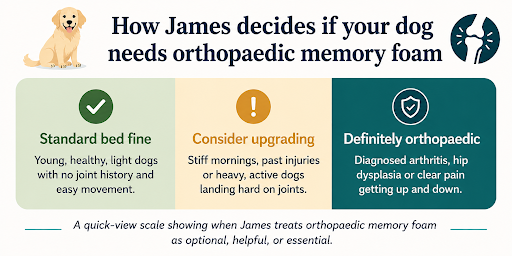
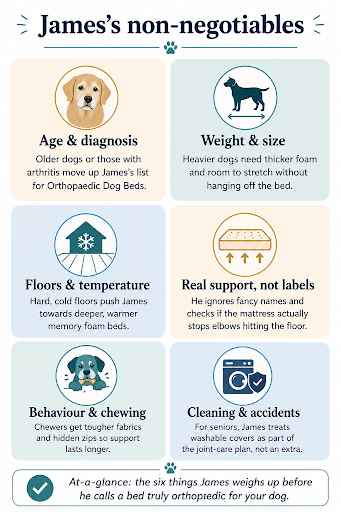
If you are already spotting stiffer mornings or awkward landings, pause here and run through James’s joint‑first checklist, then start shortlisting Orthopaedic Dog Beds and memory‑foam options by age, weight and diagnosis rather than by colour or trend.

James’s quick-view guide to when Luxury Dog Beds are a genuine health upgrade – not just a prettier cushion.
Why memory foam changes joint load (explained simply)
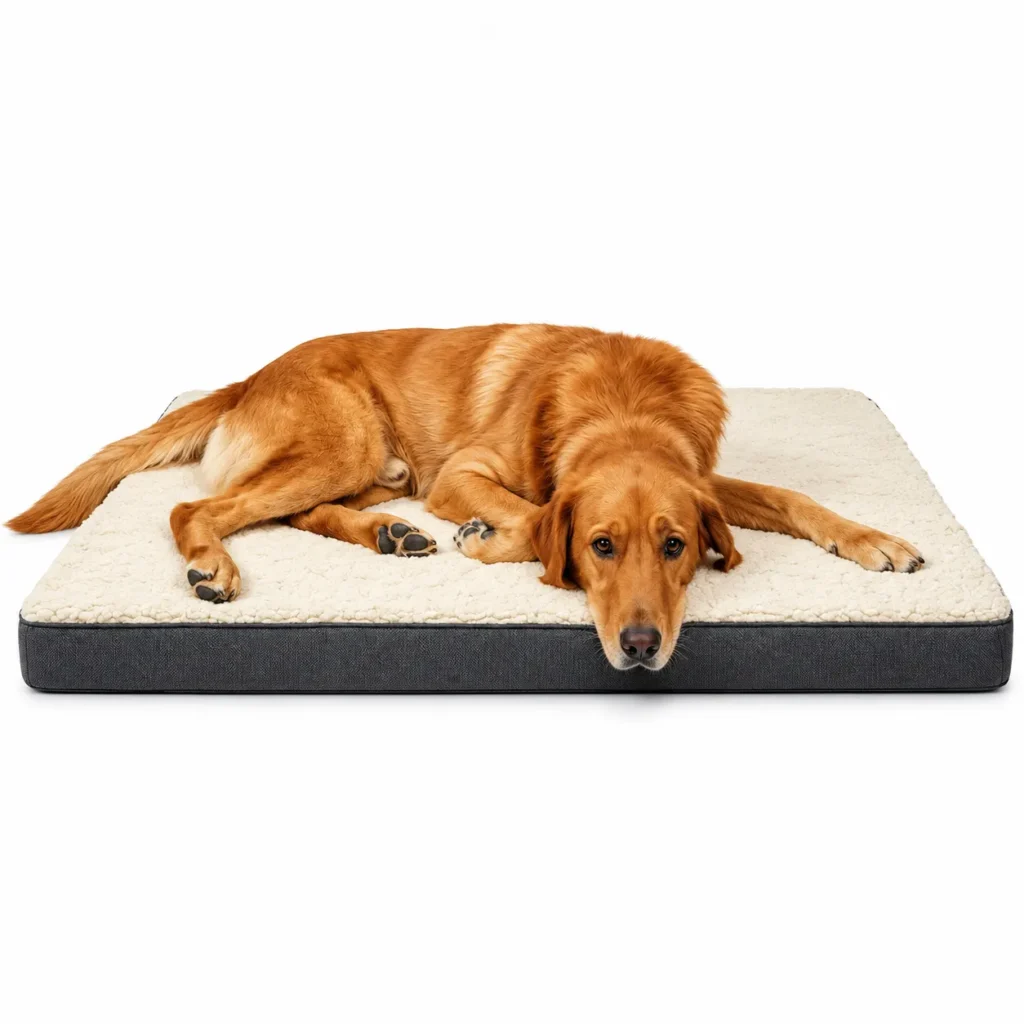
Most “memory foam is better” claims stop at comfort; James cares about how much pressure it actually takes off your dog’s joints. Proper memory foam spreads your dog’s weight across a larger area, so bony points like elbows and hips stop punching straight through into the floor; a bigger deal for heavy dogs and stiff seniors than for soft‑moving youngsters.
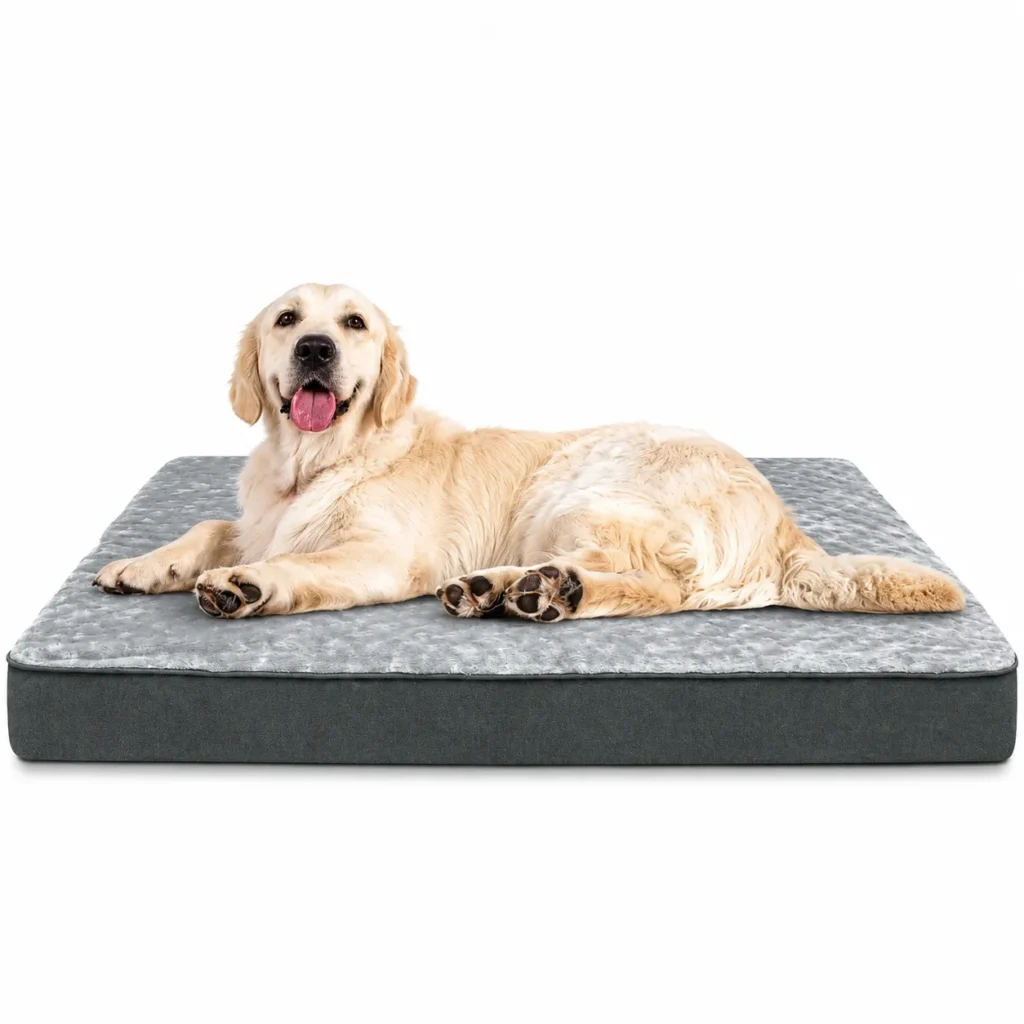
James looks at thickness and density before colour or pattern, because a thin, squishy slab sold as Memory Foam Dog Beds Online often bottoms out under a big dog and behaves like a regular cushion, not a Durable Orthopaedic Dog Mattress.
When I test a bed, I press down as a heavy dog would; if I can feel the floor, it is not truly orthopaedic – James Carter
In practice, the best Orthopaedic Dog Beds for Large Breeds pair quality memory foam with a firm base layer so joints are cushioned without sinking into a hammock.
Match your dog’s needs to the material focus James would choose first.
Give Your Dog the Comfort They Deserve
Every cat deserves a peaceful place to relax. Browse our collection of soft, enclosed cat beds designed to help your feline feel secure, warm, and comfortable throughout the day.
Common owner mistakes with “orthopaedic” and memory foam beds
James sees the same painful patterns every week when owners buy Memory Foam Dog Beds Online off the back of glossy photos and fluffy claims.
Mistake 1: Trusting the label, not the build
“Orthopaedic” or “memory foam” on the tag means nothing if the foam is thin and collapses under your dog’s weight. In most cases, James is more worried about flimsy foam and bad sizing than he is about the brand name.
Mistake 2: Going ultra‑plush for heavy or stiff dogs
Those deep, squishy toppers look cosy but let big dogs sink until elbows and hips are effectively on the floor again, which makes standing up harder, not easier.
Mistake 3: Choosing beds that are too small or awkward to step into
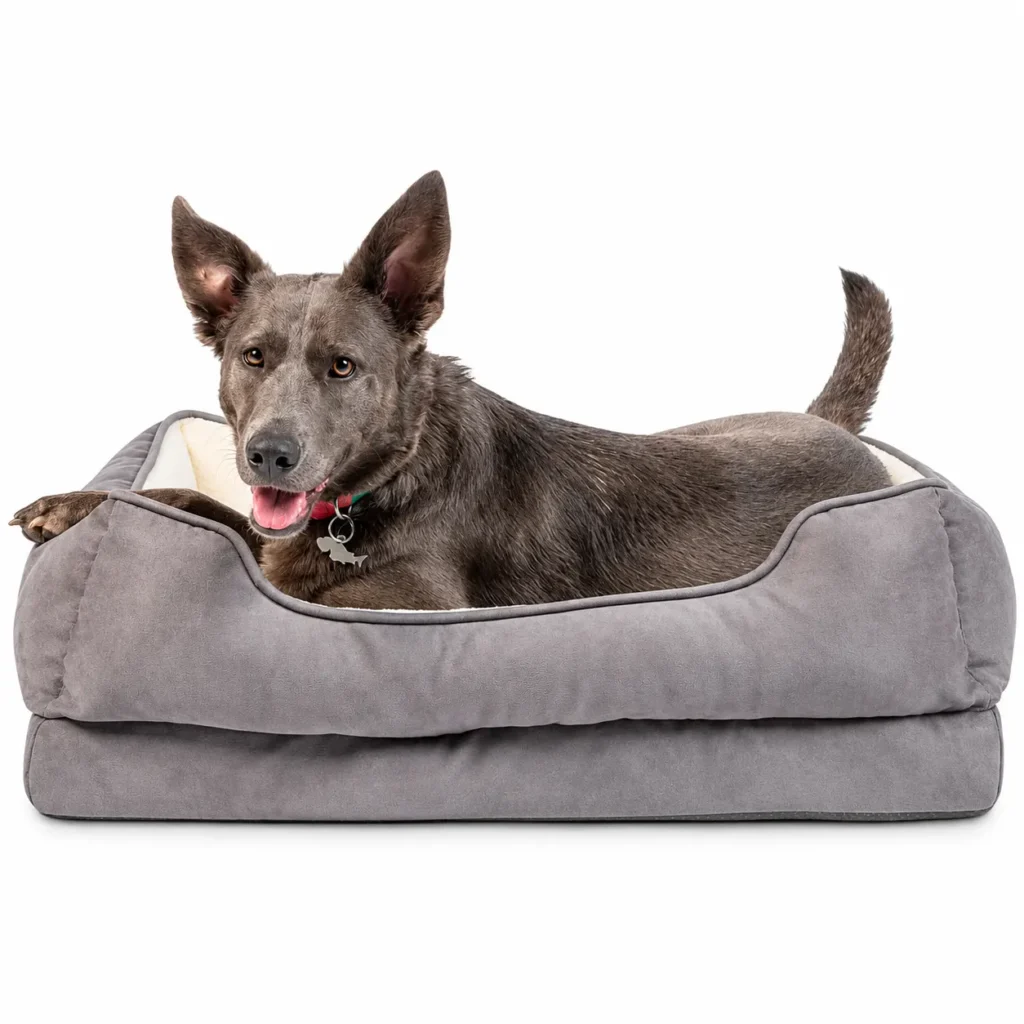
Older, sore dogs should not have to curl like a cat or climb into a “pod”; high sides and tiny surfaces turn every lie‑down into an effort.
Mistake 4: Forgetting real‑life cleaning and longevity
For seniors and long‑term joint issues, the bed has to cope with accidents, drool and daily use; non‑washable covers or delicate trims do not belong on something a dog with arthritis depends on. James’s rule here is simple: if you would not call it a Buy Vet-Approved Dog Beds standard in a clinic recovery room, it should not be sold as serious joint support at home.
Find the Perfect Safe Space for Your Cat
Whether your cat loves to burrow, curl up, or hide away for a quiet nap, we have a bed to match their personality. Discover premium designs made for comfort, security, and everyday relaxation.
James’ A vet‑style checklist for choosing the right orthopaedic bed
This is the sequence I use when I help owners choose a bed in clinic or after surgery.
James runs through the same core questions every time, adjusting thickness, firmness and shape as he goes.
Age and diagnosis
James starts with age and any diagnosis (arthritis, hip/elbow dysplasia, cruciate injuries). If joints are already compromised, he moves straight into firmer, thicker orthopaedic builds with low entry and non‑slip bases.
Weight and size
Next, he looks at bodyweight and how the dog actually lies (curled, stretched, sprawled). He increases mattress thickness and foam density as weight climbs, and sizes the bed so the dog can lie flat without hanging off the edges.
Home surfaces and temperature
James then checks whether the dog lives on hard floors or carpets, and whether rooms run cold or warm. Hard, chilly floors push him towards deeper, more insulating cores and raised designs; carpeted, warmer homes can use slightly leaner builds as long as support is intact.
Behaviour: chewers, lickers, restless sleepers
If a dog chews, licks or spins restlessly, he dials back fancy trims and moves towards tougher fabrics, hidden zips and simpler silhouettes, so the bed survives long enough to deliver the joint support paid for.
Owner needs: budget, washing, space
Finally, he considers how often the bed will be washed, how much space there is, and what the realistic budget looks like. Here he would rather protect foam quality and core support, then compromise on colour or “designer” styling, so the dog still gets a clinically useful orthopaedic surface.
James is a certified pet behaviour and environment specialist who has worked with hundreds of owners to match their dogs’ sleep habits, anxiety levels and joint needs to better home setups. He collaborates closely with vets and pet‑product brands to trial different bed designs in multi‑dog and family homes. His advice blends behaviour insight with real‑world product testing, helping you choose beds that your dog will genuinely use and that fit your space and routine.
Stress-Relieving Cat Beds
Create a Calm, Cozy Retreat for Your Cat
Help your cat feel safe, secure, and relaxed with an enclosed bed designed for comfort. Explore our collection of cozy cave cat beds and find the perfect hideaway for peaceful naps and stress-free lounging.
£49.49 – £67.49Price range: £49.49 through £67.49
£63.74
£52.49 – £63.74Price range: £52.49 through £63.74
£101.24 – £123.74Price range: £101.24 through £123.74
Cave Cat Beds
Orthopedic Cat Beds
Donut Cat Beds

Self-Warming Cat Beds
Luxury Cat Beds
Calming Dog Beds
Cooling Dog Beds

Eco-Friendly Dog Beds
Luxury Dog Beds

Orthopedic Dog Beds