
 Cave Cat Beds
 Orthopedic Cat Beds
 Donut Cat Beds
 Self-Warming Cat Beds
 Luxury Cat Beds
 Calming Dog Beds
 Cooling Dog Beds
 Eco-Friendly Dog Beds
 Luxury Dog Beds
 Orthopedic Dog Beds

Expert opinion · Cat Comfort · Styles & Comparisons
Self-Warming vs. Electric Heated Cat Beds: Which One to Choose?
Self-warming cat beds work without electricity, they retain your cat’s own body heat and return it gently during rest. Electric heated beds provide warmth from a power source and can feel warmer to the touch, but they require careful placement, ongoing cable management and strict adherence to manufacturer instructions. Neither is universally safer or warmer than the other; both depend entirely on the specific product, the home and the cat.
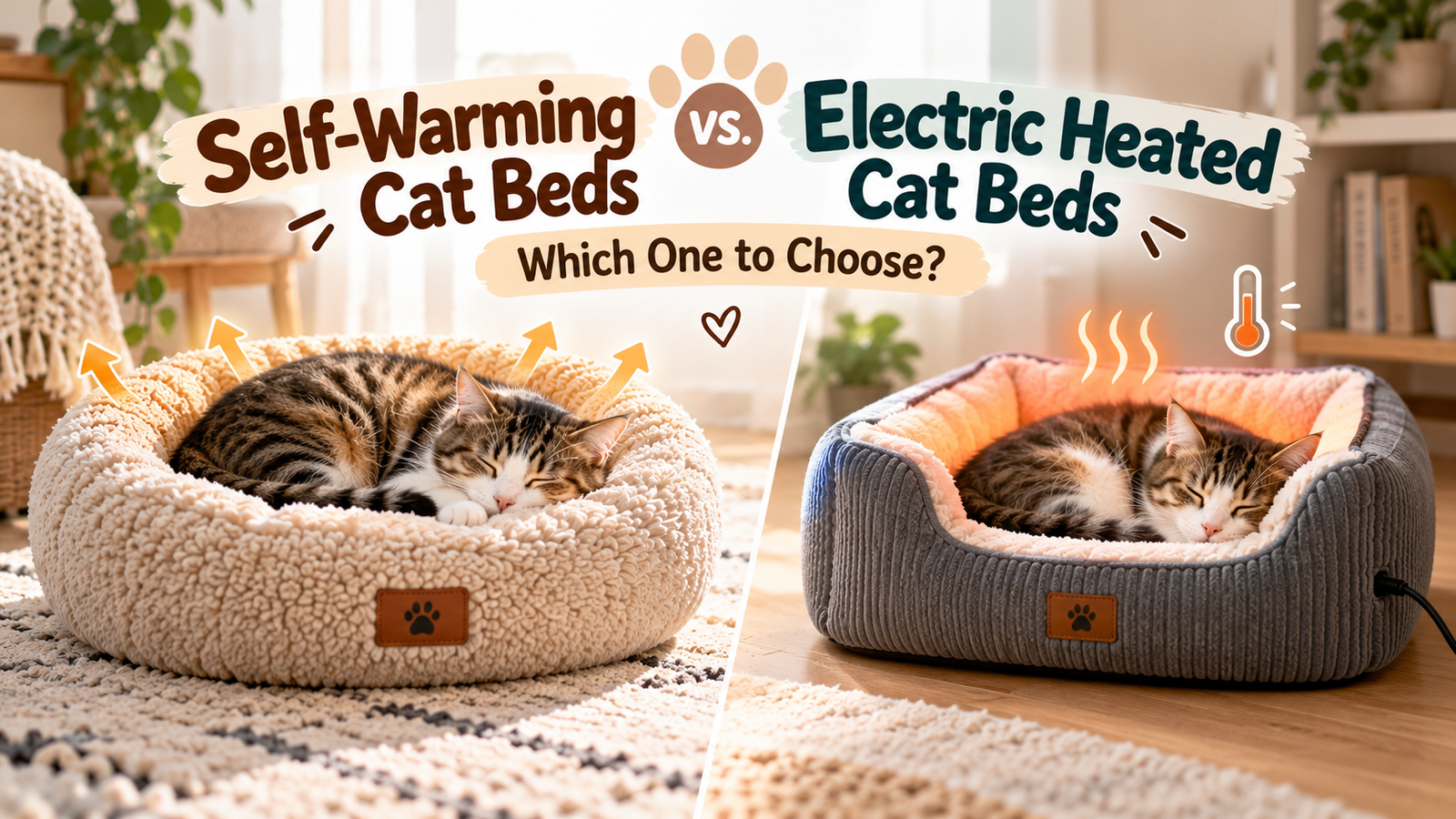
This guide compares self-warming and electric heated cat beds by how they work, which settings and cats they suit, and what to check before you buy.
Self-warming vs electric heated beds at a glance
The core difference is simple: one requires a plug; the other does not. Everything else follows from that.
Feature | Self-warming cat bed | Electric heated cat bed |
Heat source | Cat’s own body heat, reflected back | External power supply |
Plug / cable | None | Required; cable management is essential |
Placement flexibility | High; can go anywhere the cat likes to rest | Limited by proximity to a safe power source |
Supervision | Not required during use | Follow manufacturer guidance; do not leave unattended if instructions advise against it |
Warmth approach | Passive; warms up as the cat uses it | Active; surface may be warm before the cat settles |
Cleaning | Check whether cover is washable | Always unplug before cleaning; follow product instructions |
Safety burden | Low; no electrical components | Higher; cables, moisture, wear and manufacturer rules apply |
Best setting | Most indoor homes, all seasons | Homes where safe cable management is realistic |
Caution | Won’t warm a cold, unused bed | Never use a damaged cable; keep away from moisture |
If a cable-free, low-maintenance option suits most of your household’s needs, explore the Snuggle Paws self-warming cat bed collection for sizes and styles suited to a range of cats and rooms.
How each style creates warmth
Understanding how each design works helps you match it to your cat’s actual resting habits and your home setup.
Passive heat retention
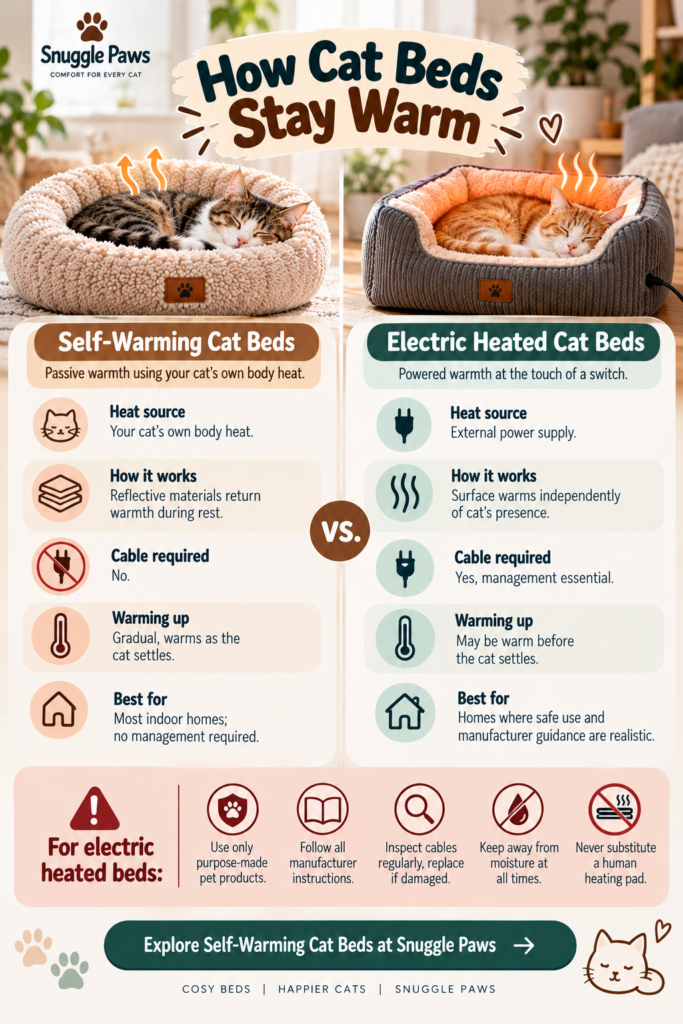
Self-warming designs use materials that reflect the cat’s body heat back towards them as they rest, rather than generating independent warmth. Warm cat beds with reflective layer construction are a general category approach; the bed itself stays at room temperature until occupied, then gradually becomes warmer the longer a cat settles in it. This means a cat who only visits briefly may not experience as much warmth as one who settles for a long nap.
The upside is simplicity: no cables, no power source, no settings to manage and no risk associated with electrical components.
Powered warmth
Electric heated beds generate warmth from a power source and may feel noticeably warm even before a cat has settled. This can be appealing for cats who like to find already-warm spots. However, the safety responsibilities are meaningfully higher. Use only pet-specific heated products and follow all manufacturer instructions, do not assume that guidance for one product applies to another. Inspect cables regularly and replace any product with signs of damage or wear. Keep heated beds away from moisture and do not place them where a cat could trap or chew a cable. Never substitute a human heating pad or electric blanket for a purpose-made pet product, they are not designed for unsupervised animal use and should never be used as replacements.
Which suits your cat and home?
This is your decision point, based on how your cat behaves.
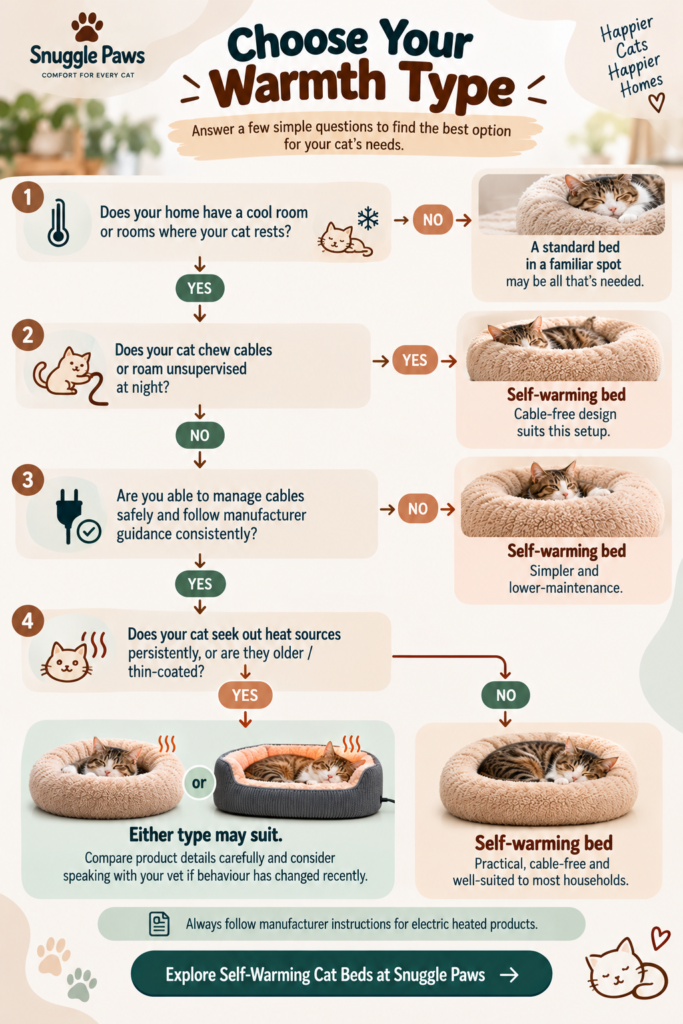
Chilly indoor cats and quieter rooms
For a cat who seeks out warm spots in a cool room such a pressing against radiators, sitting in patches of sunlight, tucking under blankets a self-warming design placed in their preferred resting spot can support more comfortable rest without any electrical setup. Heated cat beds for indoor cats of any style can help in a draughty home or during winter months, but matching the design to your practical setup matters as much as the warmth on offer.
Cable chewers and cats who roam overnight
If your cat chews cables, knocks things over or is left unsupervised for extended periods, an electric bed introduces risks that need to be managed carefully. For many households, the cable-free nature of a self-warming option makes it the more straightforward choice. This is not about one being inherently safer than the other, rather it is about being realistic about your home and your cat’s behaviour.
Older or thin-coated cats
Cats who are older, have less body fat, or whose coats offer less natural insulation may feel the cold more than younger or thicker-coated cats. If you notice your cat seeking warmth more persistently, or changing their usual resting spots to follow heat sources, it is worth mentioning to your vet, particularly if the change is sudden or accompanied by other differences in behaviour. A warm resting space can support their comfort; it cannot diagnose or address an underlying cause.
Give Your Cat the Comfort They Deserve
Every cat deserves a peaceful place to relax. Browse our collection of soft, enclosed cat beds designed to help your feline feel secure, warm, and comfortable throughout the day.
Before you buy
A few things worth checking before purchasing, regardless of which type you are considering:
- Read the safety and operating information before buying an electric product. Manufacturer guidance varies; some products should not be left unattended; others are designed for continuous low-level use. Know which you are buying.
- Check that the cover is washable and confirm whether the whole bed or only the cover can be laundered. A cat who uses a bed regularly will need it cleaned.
- Confirm the dimensions match your cat’s size and your intended placement spot. A thermal cat beds online search will return a wide range of sizes; check that the usable sleeping area is appropriate.
- Consider where you’ll put it. For an electric bed, proximity to a safe power point and realistic cable routing matter. For a self-warming bed, the spot where your cat already likes to rest is usually the best starting point.
- Check the returns and policy information before purchasing, especially for electric products.
If you are looking to buy self-warming cat beds UK-wide, confirm the product descriptions clearly distinguish passive self-warming designs from electric alternatives; the terminology is sometimes used loosely.
Verdict: the cable-free option suits most homes
For the majority of indoor homes, a self-warming bed is a practical, low-maintenance choice that suits most cats and needs no management beyond washing. It will not produce warmth independently, but for a cat who settles properly it can create a noticeably cosier resting space. Self-heating cat beds for winter are a useful addition in rooms that drop in temperature overnight or lack consistent central heating. Electric beds can be appropriate where the specific product, placement and supervision make safe use realistic but that decision should be made carefully and product-by-product, not as a category assumption.
Browse the Snuggle Paws self-warming cat bed collection if a cable-free, easy-maintenance option suits your household.
Find the Perfect Safe Space for Your Cat
Whether your cat loves to burrow, curl up, or hide away for a quiet nap, we have a bed to match their personality. Discover premium designs made for comfort, security, and everyday relaxation.
Frequently Asked Questions
Does a self-warming cat bed require electricity?
No. Self-warming beds work entirely passively; they use materials that reflect a cat’s own body heat back to them during rest. There are no cables, no plug sockets required and no power consumption. The warmth they provide depends on how long the cat settles, so a cat who uses the bed regularly will benefit more than one who only visits briefly.
Are electric cat beds safe?
A purpose-made, undamaged electric cat bed used strictly in accordance with its manufacturer’s instructions can be used safely. The key responsibilities are consistent: inspect cables regularly, never use near moisture, follow all operating guidance, and replace any product that shows signs of wear or damage. Never substitute a human heating pad for a pet-specific product. If in doubt about whether a particular product is suitable for your setup, contact the manufacturer directly.
Where should a warm cat bed be placed?
The most effective placement is where your cat already chooses to rest; a familiar corner, their usual perch or a quiet spot they return to regularly. A warm bed placed somewhere unfamiliar may be ignored regardless of how comfortable it is. For electric beds, placement must also allow for safe cable routing away from areas where it could be chewed, trapped or exposed to moisture.
Does every cat need a warm bed?
No. Cats in consistently warm homes, or cats who are naturally well-insulated and spend much of the day active, may not seek out additional warmth at all. A warm bed is most useful for cats who already show a preference for heated spots, cats in cooler rooms, and older or thinner-coated cats who may feel the cold more. Watch your cat’s existing habits and let those guide the decision.

James is a certified pet behaviour and environment specialist who has worked with hundreds of owners to match their dogs’ sleep habits, anxiety levels and joint needs to better home setups. He collaborates closely with vets and pet‑product brands to trial different bed designs in multi‑dog and family homes. His advice blends behaviour insight with real‑world product testing, helping you choose beds that your dog will genuinely use and that fit your space and routine.
Stress-Relieving Cat Beds
Create a Calm, Cozy Retreat for Your Cat
Help your cat feel safe, secure, and relaxed with an enclosed bed designed for comfort. Explore our collection of cozy cave cat beds and find the perfect hideaway for peaceful naps and stress-free lounging.
£43.49 – £59.99Price range: £43.49 through £59.99
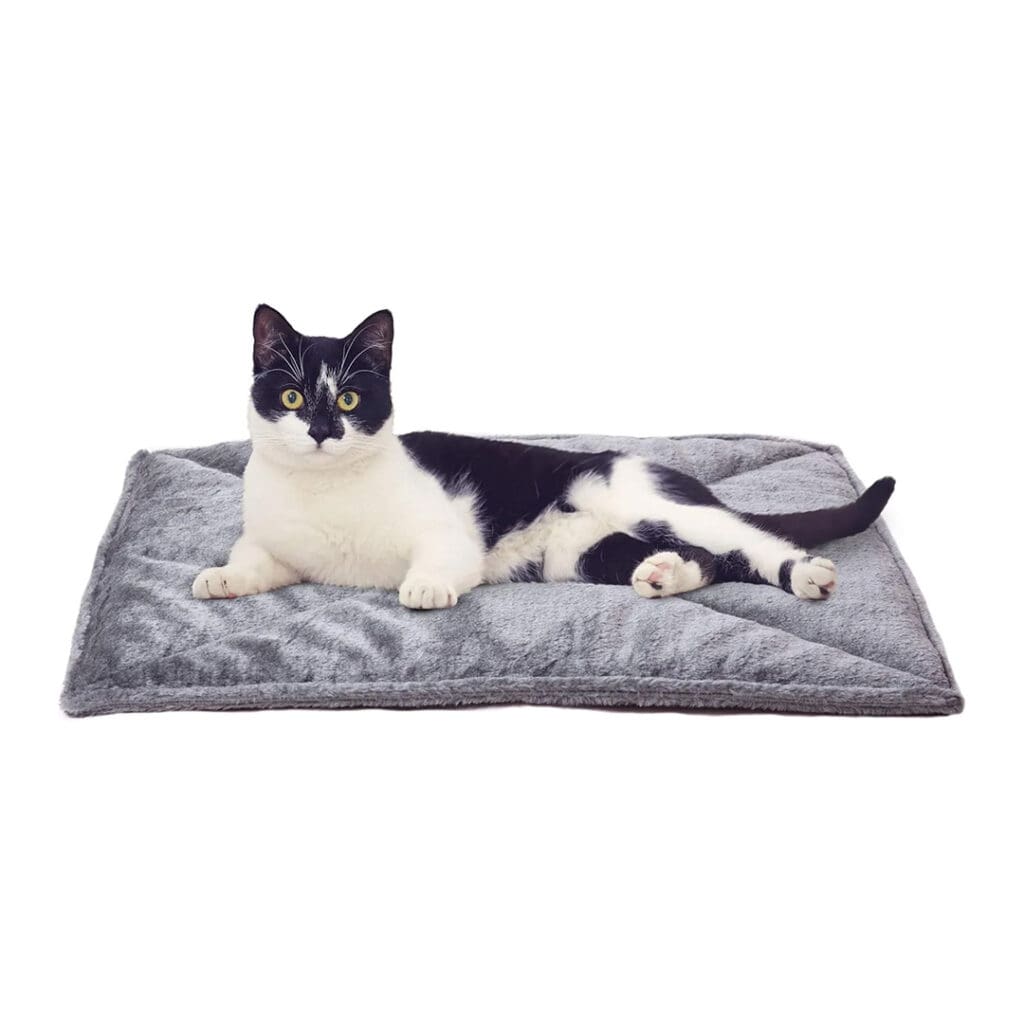
£44.99
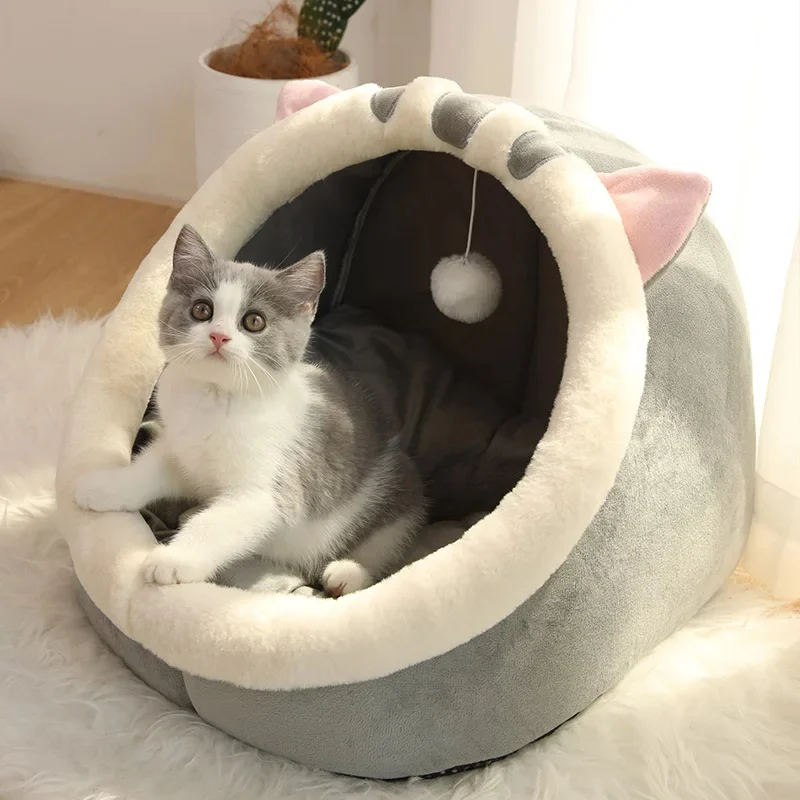
£41.24
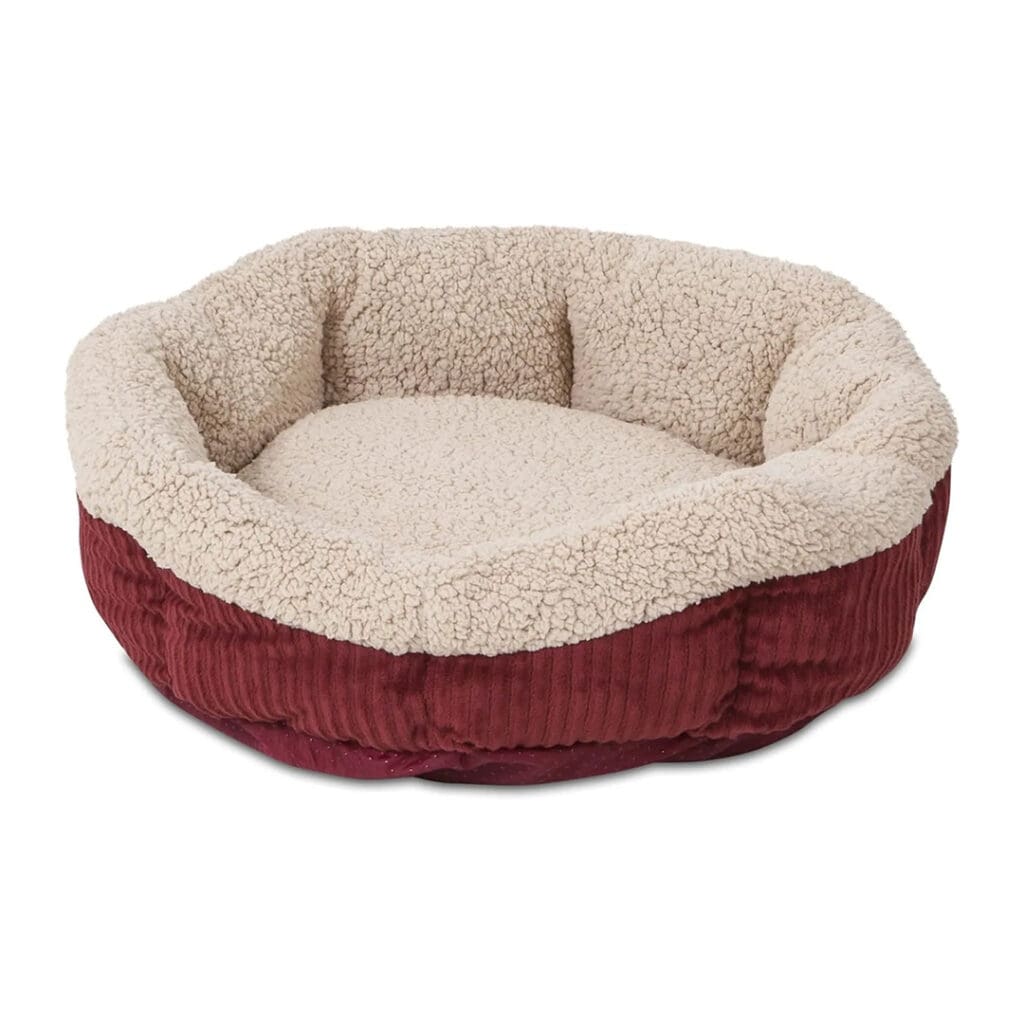
£46.49